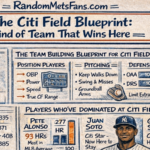
The Dodgers just bought Kyle Tucker like it was a casual Thursday morning errand, then wrapped the receipt in opt-outs like they were planning to return him if the vibes change. Four years, $240 million, escape hatches after Year 2 and Year 3, plus the kind of deferrals and bonus structure that makes your accountant reach for a stress ball. The Mets put serious money on the table, still got the polite “nice try” smile, and now the real question shows up with a flashlight. What does winning look like when the richest team in the sport is also operating like a private equity firm with batting practice?
This is the part where fans want the Mets to “answer” the Dodgers, like the offseason is a bar argument and the only rule is who throws the bigger punch. That mindset turns every winter into a loyalty test, then every April into a hangover. The Tucker miss hurts, yet it also does you a favor if you are willing to accept the lesson instead of collecting resentment like it is a hobby. The Mets did not lose a player, they ran into a market distortion that is not designed to be “won” by normal teams, even rich ones.
The Tucker Deal Is Not a Contract, It’s a Market Weapon
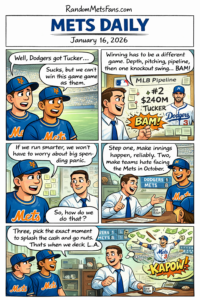
Tucker’s deal is a luxury rental dressed up as a commitment. The headline number screams dominance, while the opt-outs whisper flexibility, which is exactly how a dynasty stays a dynasty when it can buy the top shelf and still keep its hands free. This is not the old free agency model where a team takes the long-term risk and prays the back half does not turn into a medical chart. This is short-term, top-dollar, player-controlled leverage that keeps the Dodgers powerful even if the player underperforms, gets hurt, or simply wants another bite at the market.
The Mets reportedly offered four years at $220 million, which should permanently kill the lazy take that the Mets were cheap or scared. They swung hard, they still came up short, and that should tell you the game is not about whether Steve Cohen can afford the bill. The game is about whether the Mets can build a machine that wins without needing to win every celebrity auction, then chooses the one moment to blow the doors off when the conditions actually favor them.
The Mets’ Counterpunch Is Not “Spend More,” It’s “Win Differently”
A team does not beat the Dodgers by auditioning for the Dodgers. A team beats the Dodgers by building something durable enough to survive their advantages, then stacking enough depth and run prevention that October becomes a coin flip instead of a coronation. Money still matters, yet money without structure becomes a yearly ritual of chasing names, overpaying at the wrong time, then blaming the roster when the innings disappear in August.
This is where the Mets need to stop chasing a feeling and start chasing an equation. Winning in 2026 lives in two places that fans love to ignore because they are not as sexy as a superstar press conference. One place is reliable starting pitching volume, the kind that keeps the bullpen from turning into a haunted house by mid-summer. The other place is pipeline strength, because the best roster in the sport usually has the cheapest good players, plus the financial flexibility to add the right expensive one when the window is real.
Stearns Is Telling You the Plan, the Only Question Is Whether It Holds Up
David Stearns has basically handed everyone the blueprint, even if it sounds boring when you read it like a press release. He is talking about bounce-backs from injury-impacted arms, internal development, and staying open to additions through signing or trade, while also admitting the rotation needs more. That is calm leadership, yet calm does not mean safe, because the plan depends on pitchers giving you innings that cannot be assumed.
The rotation question is not “do you like the names,” it is “how many bankable innings exist on the spreadsheet before the first pitch is thrown.” Bankable innings means starts you can plan around, weeks you do not burn three relievers before the seventh, stretches where your bullpen does not carry a 4.2 innings-per-game workload like it is CrossFit.
Stearns name-checking Sean Manaea in the bounce-back bucket, while pointing to young arms like Nolan McLean as part of the solution, tells you how the Mets intend to bridge the gap. That approach can work, yet it only works if the Mets protect themselves with depth, with swingman options, with a real Plan B for the weeks where reality punches the optimistic forecast right in the teeth.
The Pipeline Move Was the Real Power Move, Not the Tucker Chase
The most quietly savage thing the Mets did in the last 24 hours had nothing to do with a marquee free agent. The Mets landed Wandy Asigen, MLB Pipeline’s No. 2 international prospect, for $3.9 million, after he had been expected to sign with the Yankees, which is the kind of move that tells you the Mets are building leverage where leverage actually matters.
This is what a modern roster looks like when it is built to last. You spend to acquire premium amateur talent, you invest in development, you stack enough young upside that trade conversations stop being hostage situations. You also create the kind of internal replacement ability that prevents a single injury from turning into a June funeral.
The Franklin Gomez trade to Cleveland for $1.5 million in international bonus pool money is the boring transaction that explains the loud headline. Smart front offices do not always win with fireworks, they win with plumbing, then they let everyone else argue about which headline felt better.
The 2025 Baseline Shows a Team That Was Decent, Not Dangerous

The 2025 Mets finished 83-79 with 766 runs scored, 715 runs allowed, and a +51 run differential. That is not a disaster, that is the profile of a team that lives in the Wild Card neighborhood, then spends too many months being one bad week away from spiraling.
A +51 run differential should not require a full rebuild, it requires smarter conversion. More stable innings means fewer games where the bullpen is asked to perform miracles. Cleaner run prevention means more nights where the offense does not need to score seven just to breathe. A deeper pipeline means the Mets can patch leaks without trading the whole future for one month of relief.
This is where the Tucker miss becomes clarifying instead of depressing. Tucker would have made the lineup better, no argument. Tucker would not magically turn an inning problem into an inning surplus, especially in a sport where the postseason is won by pitching depth and the ability to shorten games with leverage arms that are not limping.
Tucker Is Elite, Yet Even Elite Is Not a One-Player Fix
Kyle Tucker is a five-tool monster in his prime, which is why he got paid like a superstar and why the Dodgers decided the sport needed another villain arc. His career line sits at a .273 average with 147 homers, 490 RBIs, and 119 steals, plus real hardware like a Gold Glove and Silver Sluggers. His WAR totals have lived in the star range year after year, which is exactly why this contract happened the way it did.
That reality makes the key point even sharper. Even a player like Tucker does not fix a roster that cannot reliably bank starting innings, because October does not care how expensive your outfield is if your pitching plan becomes “hope and prayer by the fourth inning.”
The Mets’ offseason can only be judged correctly if the evaluation shifts from shopping to engineering. Star bats matter, yet the Mets need an infrastructure that makes stars the finishing touch, not the life raft.
The Pivot List for Mets Fans Who Want to Win, Not Just Win January
Fans can keep grading offseasons like a shopping list, then keep getting the same emotional roller coaster that ends with a July argument about bullpen overuse. A smarter approach starts with a different set of questions that actually predict wins.
Ask how the Mets plan to compress games, because that is where marginal teams become playoff teams. Ask where the next 170 reliable starter innings come from, because that is where seasons stop collapsing. Ask how the Mets avoid another summer of bullpen triage, because that is where good rosters become exhausted rosters.
Ask whether the pipeline is strong enough to trade from depth instead of trading from desperation, because that is how real contenders behave when the deadline shows up.
Stop grading the Mets like it is a catalog. Grade them like a machine that needs inputs to produce wins, innings, run prevention, depth, development, then one well-timed knockout swing when the moment is right. The Dodgers just reminded everyone what the top of the sport looks like, so the Mets’ response needs to be smarter than jealousy and louder than vibes.
Hit the RMF newsletter, jump into the forums, and tell me the move you want most, one starter you trust for volume, one internal arm you think can surprise, and one prospect you refuse to trade under any circumstances.
Join the conversation at RandomMetsFans.com
Subscribe to the newsletter
Let’s build the smartest Mets community on the internet