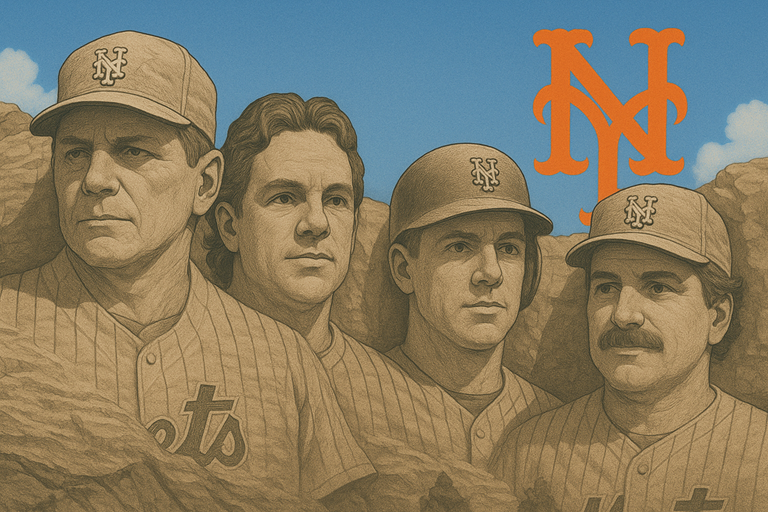
New York Mets fans have endured it all, miraculous highs, agonizing lows, and every bizarre incident in between (remember the Grand Slam Single? Yeah, we do). Through it all, a few legends have risen above the rest, etching their faces into our collective Mets-fan psyche. If we were to carve a Mets Mount Rushmore, four giant stone heads representing the cream of the orange-and-blue crop, who makes the cut? It’s no easy task (our franchise’s history is equal parts amazing and “Amazin’”ly tragic), but let’s embrace the challenge with the bold, funny, and nostalgic candor that comes naturally to long-suffering Mets diehards. (Some might even joke that the Mets’ Mount Rushmore should just be Tom Seaver four times, he was THAT great!. But fear not, we’ll spread the love.)
Before we start chiseling, a couple of ground rules: It’s not just about stats (though we’ve got stats aplenty); it’s also about cultural impact and fan adoration. These four players aren’t just the best on paper, they meant the most to the fans and to the franchise across all eras of Mets history. So grab your hard hat and imaginary jackhammer, it’s time to carve out the Mets Mount Rushmore!
Tom Seaver, The Franchise Savior of ’69
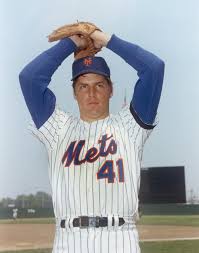
If the Mets had royalty, Tom Seaver would wear the crown (and probably throw it for a strike). Seaver isn’t just on the Mets’ Mount Rushmore, he’s the George Washington of it, the first face you’d see, towering with that confident ʺlet’s turn this ship aroundʺ look. When Seaver arrived in 1967, the Mets were the laughingstock of the league, lovable losers still learning to play winning baseball. By 1969, “Tom Terrific” had almost single-handedly transformed them into World Champions. His resume glitters with 3 Cy Young Awards, 12 All-Star selections, a Rookie of the Year, and a crucial role in the 1969 “Miracle Mets” World Series title. Seaver’s statistical excellence is beyond dispute, 311 career wins, 2.86 ERA, 3,640 strikeouts, but it’s his impact on the Mets’ culture that looms largest. He gave a young franchise legitimacy, hope, and a swagger it never had. Mets fans literally nicknamed him “The Franchise,” because he embodied the team’s identity and ambitions.
Bold and clutch, Seaver authored countless iconic moments: from near-perfect games (damn you, Jimmy Qualls!) to 19-strikeout performances. Every fifth day at Shea Stadium in the late ’60s and ’70s felt like an event, “Seaver Day,” when fans knew greatness was on the mound. When he led the upstart ’69 Mets to a championship, he cemented himself as our ultimate hero. Of course, in true Mets fashion, the relationship wasn’t without heartbreak, the 1977 “Midnight Massacre” trade that sent Seaver away still haunts Queens like a bad dream. But even that ugly divorce couldn’t dim his shine; Seaver eventually came home (1983) and today his #41 is retired and a statue of his likeness stands eternally at Citi Field. For a franchise that’s often the butt of jokes, Tom Seaver gave us credibility and pride. His presence was so towering that, as one writer quipped, some fans would happily put Seaver’s face up four times on Mount Rushmore if they could!. He’s that ingrained in Mets lore. Simply put, Tom Seaver is the bedrock of Mets history, our first true superstar and forever The Franchise.
Mike Piazza, The Power and the Passion
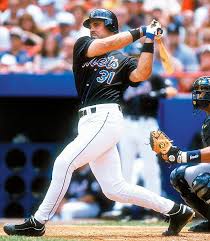
Next up is the guy who put the power in the Mets’ powerhouse of the late ’90s: Mike Piazza. When Piazza arrived in 1998, it was as if a beleaguered fanbase collectively thought, “Hallelujah, a real hitter in Queens!” And boy, was he ever. Mike Piazza is the greatest hitting catcher in baseball history, and he brought his Hall of Fame bat to the Mets right when we needed it most. With his flowing mullet, forearms like tree trunks, and a flair for the dramatic, Piazza became the Mets’ offensive centerpiece and a cultural icon in NYC. He bashed 220 home runs in a Mets uniform (427 total in his career) and carried the team to the 2000 World Series. But beyond the gaudy stats, Piazza gave Mets fans something even more valuable: legitimacy and heart in big moments. Case in point: that magical night of September 21, 2001, the first game in New York after 9/11. Piazza stepped to the plate in the 8th inning, hit a monstrous go-ahead home run against the hated Atlanta Braves, and for a few transcendent seconds united and uplifted a city in pain. Ask any Mets fan, that homer was more than a baseball moment; it was a cultural moment. Tears were shed at Shea that night as joy and relief washed over tens of thousands of New Yorkers. Piazza consistently “came up clutch” in big spots and seemed to thrive under NYC’s bright lights and intense pressure.
Statistically, Mike’s a no-brainer on this mountain: a 6-time All-Star with the Mets, multiple Silver Sluggers, and a .296 average in NY. He’s enshrined in Cooperstown wearing a Mets cap, which still gives us goosebumps. But it’s the intangibles and anecdotes that endear him just as much. Mets fans loved his gritty toughness, like playing through injuries or that time in the 2000 World Series when Roger Clemens infamously hurled a broken bat at Piazza (our guy merely arched an eyebrow and carried on like a boss). Piazza was the rock-star catcher who handled New York’s pressures with a cool confidence. He gave Mets fans plenty of laughs and fist-pump moments (the post-9/11 homer, the cap-flying-off sprint around third on a go-ahead hit, the countless curtain calls at Shea). Importantly, Piazza chose to stay in Queens (signing a long-term deal) when he easily could have fled to brighter lights or easier pastures. That loyalty and leadership through a pivotal era make him beloved. Bold, passionate, and clutch, Mike Piazza brought star power and a big-hearted spirit to the Mets, earning him a granite-sized spot on our Mount Rushmore.
David Wright, Captain America of Queens
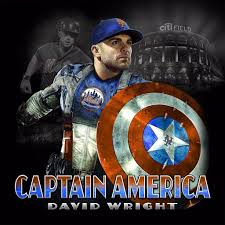
No Mets Mount Rushmore would be complete without David Wright, the homegrown golden boy who became the beloved Captain of the Mets in the 2000s. If you wrote a novel about the “perfect” Met, it would look a lot like David Wright’s career. He was a 7-time All-Star, 2-time Gold Glover, 2-time Silver Slugger, and he owns basically every significant Mets offensive record (most hits, RBIs, runs, doubles, you name it, he’s atop the list). But beyond the numbers, Wright was our guy, drafted by the Mets, came up through our system, and stuck with us through thick and thin (oh, there were plenty of thin). Fans affectionately dubbed him “Captain America” after his star turn for Team USA, and indeed he carried himself with a superhero’s combination of strength, optimism, and decency. In an era when the Mets often found new ways to break our hearts, David Wright was the steady beacon of hope and class. He thrilled us with his electric plays, diving stops at third, opposite-field line drives, clutch homers, and he did it all with a smile (and often with his helmet flying off his head as he hustled around basepaths).
Wright’s cultural impact on the franchise is immense. He bridged generations of Mets fandom: debuting in 2004 when the team was middling, leading a resurgence into the mid-2000s (remember that glorious 2006 season?), and later mentoring a new wave of players in the 2015 pennant run. He was named the fourth captain in team history, and deservedly so, nobody embodied the Mets’ fighting spirit more. We also ached with David through his troubles. When spinal stenosis ravaged his body and cut short his career, Mets fans collectively felt the sting. Yet even in his farewell in 2018, Wright gave us one last shining moment, taking the field to a lengthy standing ovation and reminding everyone what true loyalty looks like. He spent his entire 14-year career with the Mets, an increasingly rare feat, and in doing so became as synonymous with the franchise as the blue and orange colors themselves. Nostalgic fans still get misty-eyed recalling his postseason home run in the 2015 World Series at Citi Field, a captain coming through on the biggest stage. David Wright represented the heart of the Mets for over a decade, leading by example with grit, professionalism, and genuine love for the game and the fans. His visage absolutely deserves to be carved in our Mount Rushmore, forever smiling (we assume) over Flushing.
(Side note: If David had played for a different franchise, he might have a championship ring or two… but hey, we Mets fans like to think enduring the struggle just made him more of a legend. The Captain didn’t abandon ship, and that’s why we love him.)
Keith Hernandez, The Glove, the ‘Stache, the Leader
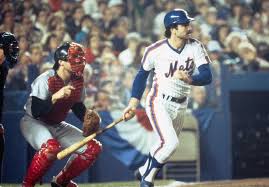
Rounding out our Mets Mount Rushmore is a man whose impact on the franchise is still felt both on and off the field: Keith Hernandez. If Seaver gave the Mets respect in the ’60s and ’70s, Keith did the same for the ’80s. Acquired in a savvy trade in 1983, Hernandez instantly changed the culture of the team from perennial underachievers to swaggering contenders. He brought over his championship pedigree (1982 World Series winner and NL MVP with St. Louis) and instilled a winning attitude in a young Mets clubhouse that desperately needed it. On the field, Keith was the best defensive first baseman of his era, ever, some argue, snagging 11 consecutive Gold Gloves (the last six with the Mets). Imagine a stone-carved Hernandez on our mountain, complete with that iconic bushy moustache and a glove in hand; it’s a perfect tribute to the guy whose defense was so good, he basically turned bunts and grounders into automatic outs. Offensively, Keith was no slouch either: a lifetime .296 hitter, clutch RBI man, and on-base machine who could smoke line drives and also drop down a surprise bunt if you dared play back. In the Mets’ glorious 1986 championship run, Hernandez was co-captain (the first in Mets history) and the undisputed on-field general. His intensity and refusal to accept losing were captured in moments like Game 6 of the 1986 World Series: after making the last out in the 10th, Keith famously went to the clubhouse, cracked open a beer (nerves of steel), then returned to the dugout just in time to see the legendary comeback rally unfold. That’s leadership (and maybe a sprinkle of superstition)!
Culturally, Keith Hernandez is adored by Mets fans, and not just for what he did in the ’80s. He’s remained a huge part of Mets life as a long-time broadcaster, 17 seasons and counting in the SNY booth, bringing witty commentary and honest critique (sometimes hilariously grumpy critique) to every game. Generations of fans know him either as the 1986 team’s heart and soul or as the charming, cat-loving TV voice who says “Just drive in the damn run!” during RBI situations. Either way, his persona looms large. Let’s not forget Keith’s pop-culture cameo on Seinfeld, playing himself in the famous “Magic Loogie” episode, that cemented him as a bona fide New York celebrity beyond baseball. The man is a walking legend: he even had his #17 retired by the Mets (a long overdue honor) and remains a fixture at Citi Field. With his trademark mix of boldness (sometimes bluntness), humor, and leadership, Keith gave the Mets the edge they needed to become champions and has given fans endless entertainment since. The sight of Hernandez’s stone-carved face up on Mets Rushmore, perhaps with that confident, slightly mischievous grin we’ve come to love, would not only symbolize the 1986 glory days but also remind us that baseball IQ, defense, and attitude can change a franchise’s destiny. Keith is the living embodiment of the ’86 Mets swagger, and for that, he’s forever enshrined in our hearts (and thus, on this mountain).
Honorable Mentions: Four Who Almost Made the Mountain
Choosing only four Mets greats is an exercise in exclusion (and maybe masochism), because many other legends nearly carved their own place in Mets history. Here are four honorable mentions, the “next four” who came this close to our Mount Rushmore, each one a fan favorite and Mets icon in their own right:
- Dwight “Doc” Gooden, In the mid-1980s, Doc Gooden wasn’t just the Mets’ ace, he was a phenomenon. His 1985 season defies belief: a 24–4 record, mind-boggling 1.53 ERA, and 268 strikeouts, a Triple Crown of pitching dominance that earned him a unanimous Cy Young at age 20. Shea Stadium rocked with every Gooden start (“Doctor K” had us all prescription-addicted to strikeouts). At his peak, Doc’s explosive fastball and knee-buckling curve (the infamous “Uncle Charlie”) made him unhittable and a true NYC sports superstar. He electrified a generation of fans (people literally wore “K” signs for his strikeouts, lining the upper decks with them). So why isn’t he on the big four? Longevity and off-field troubles. Gooden’s battles with substance issues cut short what could have been a Sandy Koufax-like career. Though he never quite sustained his early dominance, he still earned a ring in ’86 and remains a beloved figure. Mets fans remember the awe of “Dr. K” in those early years, and on our mountain, he’d be the face etched with a million-dollar smile and a hint of what might have been.
- Darryl Strawberry, The straw that stirred the drink in the ’80s (pun intended). Darryl Strawberry was the Mets’ homegrown power-hitting prodigy, blasting majestic moonshot home runs that often threatened planes leaving LaGuardia. With eight straight All-Star selections as a Met, “Straw” was the feared slugger in our lineup. He finished his Mets tenure as the former franchise’s all-time home run leader with 252 bombs, a record that stood for over three decades. Beyond the numbers, Darryl had that cool, sweet swing and a flair that made him a Shea Stadium rock star. Every time he came to bat, the PA would blare “Daaaaaaaaaryl,” and the crowd buzzed anticipating fireworks. He was an integral part of the 1986 champs, providing clutch hits and a big personality in a clubhouse full of them. Like Gooden, Strawberry’s Mets legacy has a tinge of what-could-have-been, off-field issues and a departure to Los Angeles in 1990 left fans with bittersweet feelings. But any Mets fan who lived through the ’80s will tell you: when you picture a dominant Mets team, you picture Darryl in right field, finger pointed to the sky on a home run trot. His impact on Mets culture (and on opposing pitchers’ psyches) was enormous. He just misses the Mount Rushmore cut, but he’s forever an orange-and-blue legend, carved in our memories if not in stone.
- Gary Carter, The Kid with the permagrin and Hall of Fame credentials. Gary Carter arrived in 1985 and was essentially the final piece of the championship puzzle. Already a superstar catcher from Montreal, Carter’s infectious enthusiasm and veteran leadership meshed perfectly with the brash young Mets. He hit a walk-off winning homer on Opening Day ’85 in his Mets debut, talk about instant beloved status! In 1986, Carter’s clutch hits (like his 2-homer game in the NLCS Game 4, or the single that ignited the famous two-out rally in Game 6 of the World Series) and handling of the pitching staff were invaluable. Statistically, he finished with over 300 career homers and was an 11-time All-Star, and he entered Cooperstown (mostly as an Expo, but we claim a big chunk of his heart). More than stats, Gary Carter was the emotional center of the team. His nickname “The Kid” captured his boundless joy and hustle on the field; even in the tensest moments, Carter seemed to be having the time of his life playing baseball. Mets fans adored that. He would squat behind the plate flashing that big smile (who smiles while catching Nolan Ryan-level heat? Gary did!), then fire a laser to nab a would-be base stealer. Carter’s tenure in New York was only five seasons, but the impact was championship-caliber. He became a New Yorker in those years, even helping lead the 1986 ticker-tape parade celebrations with unabashed glee. While his overall career was split among teams, his cultural impact in New York’s championship run secures him a spot in Mets folklore. Gary just misses being on the mountain only because others had longer tenures; otherwise, the Kid would be up there grinning in granite.
- Jacob deGrom, The lone representative of the recent era, “Jake” deGrom is as dominant a pitcher as the Mets have seen since Seaver and Gooden. Honestly, in terms of sheer talent, deGrom might deserve a whole mountain of his own. The man won back-to-back Cy Young Awards in 2018 and 2019, posting video-game numbers (a 1.70 ERA in 2018, followed by a 2.43 ERA in 2019) while making hitters look absolutely foolish. He mowed down batters with 100mph heat and a slider from hell, all with a stoic, cool demeanor that made us feel like every fifth day was in safe hands. Heck, deGrom even earned Rookie of the Year in 2014 and made four All-Star teams, giving Mets fans reason to cheer in some otherwise rough seasons. Culturally, he became a symbol of modern Mets frustration: so much excellence, yet the poor guy often got no run support (we’re talking historic levels of no-decisions and tough-luck losses, a true Mets curse). Fans fiercely loved deGrom; he was humble, hardworking, and absolutely unhittable at his peak (his 2018 season was one for the ages). Why isn’t he on the big four? Longevity and the way it ended. Multiple injuries in later years and an unexpected departure to Texas in free agency left a bit of a sour aftertaste. Some jaded Mets fans mutter “typical Mets” that we couldn’t fully capitalize on deGrom’s prime (one World Series trip in 2015, where Jake was great). That said, Jacob deGrom’s 2.50 ERA across nine seasons in New York is the stuff of legend, and when he was healthy, every start was must-watch, historic brilliance. If our Mount Rushmore had a fifth face, deGrom would be chiseling his way on for sure, likely with that focused, no-nonsense expression he wore while carving up lineups for nearly a decade in Queens..
Each of these honorable mentions left an indelible mark on Mets history. In a franchise defined by dramatic highs and lows, these players gave fans endless thrills and reasons to believe. The Mets Mount Rushmore could easily extend beyond four if history allowed, but the exercise forces tough choices, and a little friendly debate (because hey, being a Mets fan is all about debating the pain and the glory in equal measure).
Bold, Funny, Nostalgic, Sharp, A Mets Fan’s Conclusion: Being a Mets fan is a wild ride on the Cyclone at Coney Island, terrifying drops followed by exhilarating highs, with some whiplash and laughter along the way. The four faces we’ve carved out, Seaver, Piazza, Wright, Hernandez, embody the best of those highs, the guys who delivered the most joy, pride, and yes, even a bit of that lovable Mets quirkiness. They span the eras from Miracle Mets to the 80’s swagger, from the Piazza-led revival to the new stadium era. We honor them not just for what they did (Cy Youngs, World Series rings, record-setting stats) but for how they made us feel as fans. They made us pump our fists, wipe away tears (of joy and of sorrow), and keep coming back for more Amazin’ moments. Mount Rushmore is literally set in stone, and so are these legends in the story of the New York Mets.
Now, fellow fans, take a step back and admire our handiwork: four giant Mets heads on a rocky outcrop somewhere (probably in Flushing). Tom Seaver’s resolute stare, Mike Piazza’s intense gaze (and maybe a stone mullet flowing in the wind), David Wright’s determined grin, and Keith Hernandez’s iconic moustache immortalized in granite. It’s bold, it’s a bit absurd (very Metsian), and it’s ours. Just like the team we obsess over, this Mets Mount Rushmore is a mix of heart and talent, nostalgia and hope, with a dash of that cynical humor only Mets fans truly understand. And if you squint, you might even see Doc, Darryl, the Kid, and deGrom’s spirits in the background, cheering on the big four.
Let’s face it: the real Mount Rushmore is in South Dakota, but the Mets Mount Rushmore lives in our hearts and in our never-ending debates at the local pub. So who makes your cut? ? Let’s Go Mets!
Sources
- Brian Germinaro, Rising Apple, “Who is on the NY Mets Mount Rushmore…?” (Jan 2025), Provided the baseline that Seaver, Wright, and Piazza are “locks” and makes the case for Hernandez as the fourth face, noting each player’s impact and accomplishments.
- Brett Topel & Greg Prince, Mount Rushmore of the New York Mets (Skyhorse Publishing, 2021), Described the concept of a Mets Mount Rushmore and confirmed the four players (Seaver, Hernandez, Piazza, Wright) chosen by a fan vote in 2015, humorously noting some would argue “Tom Seaver four times” could fill it by himself.
- Mark Prussin, CBS News New York, “Pete Alonso breaks Mets all-time home run record…” (Sept 2023), Included the Mets’ all-time home run leaderboard, showing Darryl Strawberry held the record (252 HR) until Pete Alonso surpassed it, highlighting Strawberry’s long-standing mark.
- StatMuse / Baseball Reference, Statistical archives for Dwight Gooden’s 1985 season, Used for recalling Gooden’s extraordinary 1985 stats (24–4, 1.53 ERA, 268 K’s, NL Triple Crown and Cy Young Award) which cemented his iconic status in Mets lore.
- David Schoenfield, ESPN, “Mets’ Jacob deGrom 7th in NL to win 2 straight Cy Youngs” (Nov 2019), Background on Jacob deGrom’s achievements with the Mets, including back-to-back Cy Young Awards in 2018–2019 and his place in Mets history alongside Tom Seaver as multi-Cy Young winners.
- Mets Franchise History & Fan Recollections, General historical knowledge was used to describe the cultural impact of players like Keith Hernandez (trade in 1983, ’86 leadership, current broadcaster), Mike Piazza (post-9/11 home run, Hall of Fame induction wearing Mets cap), and David Wright (captaincy, franchise records, emotional 2018 farewell). These reflect widely documented Mets moments and fan sentiments (as seen in numerous articles, books, and broadcasts over the years).