The New York Mets have seen it all, from laughable early days to miraculous championships. For a franchise with only two World Series titles (1969 and 1986), the Mets have still produced several powerhouse teams and magical seasons that live on in fans’ memories. In ranking the best Mets teams ever, we consider a combination of factors: regular season record, postseason success, roster strength, historical significance, and fan impact. In true Mets fashion, some teams on this list didn’t even win a championship, but their Amazin’ runs, larger-than-life characters, or sheer dominance have earned them a place in franchise lore. So, ya gotta believe as we count down the top Mets teams of all time, mixing analysis with a dash of Mets fan humor (and heartache) along the way.
5. 1973 New York Mets
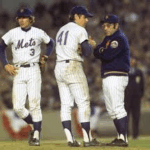
The 1973 Mets might not have the gaudiest record, but they epitomized scrappy, never-say-die baseball. They went just 82-79 in the regular season, barely above .500, yet that was enough to win a weak NL East by 2.5 games. Offense was hard to come by (only 3.78 runs per game, near the bottom of the league), but the pitching kept them alive. Tom Seaver won 19 games with a sparkling 2.08 ERA, leading a staff that posted a 3.26 team ERA (3rd-best in the NL). Fellow starters Jerry Koosman, Jon Matlack, and closer Tug McGraw (who coined the rallying cry “Ya Gotta Believe!” that summer) helped carry an injury-plagued squad.
In October, the 1973 Mets caught fire. They stunned the heavily favored Cincinnati Reds (the “Big Red Machine”) in a fierce five-game NLCS, earning the pennant. McGraw’s “Ya Gotta Believe” mantra had seemingly come to life. In the World Series, the Mets pushed the defending champion Oakland A’s to seven games, even taking a 3-2 series lead before running out of magic. Though they fell one win short of a title, this underdog team’s historical significance and fan impact are immense, from the mid-season turnaround to the enduring rallying cry. The 1973 Mets proved that a mediocre regular season means nothing once you believe and get hot at the right time.
4. 2015 New York Mets
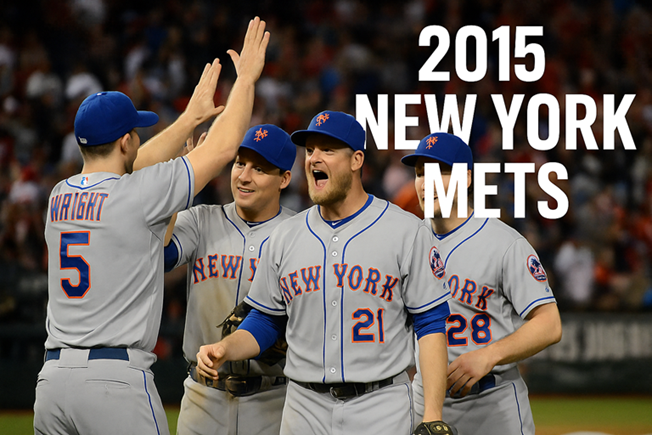
The 2015 Mets were a whirlwind of excitement that re-energized the fanbase and nearly brought home a championship. Their regular season record 90-72 doesn’t jump off the page, but a midseason surge made all the difference. A young power pitching rotation led by Jacob deGrom (14-8, 2.54 ERA, All-Star ace) and Matt Harvey (13-8, 2.71 ERA in his “Dark Knight” comeback season) gave the Mets a chance to win every night. Rookie Noah Syndergaard (“Thor”) debuted with high-90s heat, and veterans like Bartolo Colon provided depth. Offensively, the team transformed after a crucial trade deadline acquisition of Yoenis Céspedes, who hit .287 with 17 homers in just two months for New York. Captain David Wright’s return from injury down the stretch, Curtis Granderson’s 26 home runs from the leadoff spot, and Daniel Murphy’s solid bat (.281, 14 HR in season) rounded out a once-struggling lineup that suddenly became potent.
The postseason is where the 2015 Mets truly shined. They defeated the Dodgers in a dramatic five-game NLDS, then swept the Cubs in the NLCS to win the franchise’s fifth pennant. Murphy became a postseason legend, homering in six straight games (seven total in the NLDS/NLCS), an MLB record, while hitting .529 in the NLCS to earn MVP honors. His transformation into a one-man wrecking crew had Mets fans joking he was channeling Babe Ruth. In the World Series, the Mets fell to the Kansas City Royals in five games, with heartbreaks like a blown Game 1 save and an infamous Game 5 decision to let Harvey try for a complete game. Despite coming up short, the 2015 Mets earned their spot here for their historical significance (first NL title in 15 years) and fan impact. That electric postseason run, from the “Dark Knight” on the mound to Murphy’s home run binge, gave a new generation of Mets fans a taste of October magic and optimism for the future.
3. 2000 New York Mets
The 2000 Mets combined resilience and star power to win the National League pennant and reach a historic World Series. They finished 94-68 in the regular season (one game behind Atlanta in the NL East) and grabbed the NL Wild Card. This squad was headlined by Mike Piazza, the Hall of Fame catcher who in 2000 was at his offensive peak, he hit .324 with 38 home runs and 113 RBIs. Piazza and All-Star second baseman Edgardo Alfonzo (.324 average) anchored a lineup that also featured Robin Ventura and Derek Bell. On the mound, lefties Al Leiter (16 wins) and Mike Hampton (15 wins) led a solid pitching staff. Hampton, in particular, was clutch in the playoffs, but during the season both he and Leiter posted ERAs in the low 3.00s to keep the Mets humming.
In October, the Mets beat the Giants in the NLDS and the Cardinals in the NLCS, setting up the first Subway Series World Series in New York since 1956. Hampton was dominant in the NLCS, winning MVP after two wins (including a series-clinching shutout). While the 2000 World Series ended in a five-game defeat to the Yankees, the matchup’s significance can’t be overstated, it was heartbreaking because of who they lost to. Falling to the crosstown-rival Yankees (who were in the midst of a dynasty) was a tough pill to swallow, but the 2000 Mets are fondly remembered. They had a strong roster and gave Mets fans a thrilling ride, and for a moment, owned the back pages in New York. Historically, this team is also noteworthy for being the last Mets squad to win a pennant in the 20th century, and it took another 15 years for the Mets to return to the Fall Classic.
2. 1969 New York “Miracle Mets”
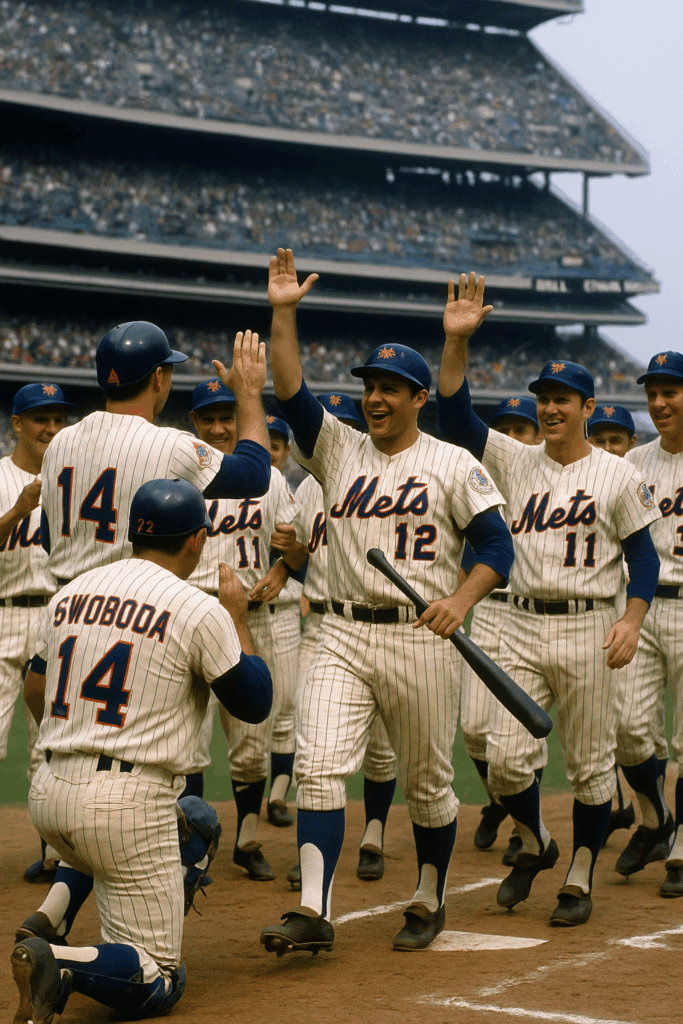
The 1969 Mets are the stuff of legend, a Cinderella story that remains one of baseball’s most beloved miracles. In 1968, the Mets had won just 73 games and finished ninth, so expectations were low. But in ’69, under manager Gil Hodges, everything changed. The Mets went 100-62, riding an incredible second-half surge (they made up a large deficit to overtake the Cubs) and winning the new NL East by 8 games. The roster featured a terrific young pitching staff, Tom Seaver had a Cy Young season with a 25-7 record and 2.21 ERA, and Jerry Koosman was a strong #2, going 17-9 with a 2.28 ERA. Nolan Ryan contributed out of the bullpen and rotation, and the team’s 2.99 ERA was tops in the NL. Offensively, the Mets were unspectacular but got timely contributions. Left fielder Cleon Jones batted .340 (second in the NL), center fielder Tommie Agee hit 26 homers, and Hodges famously platooned players like Ron Swoboda and Art Shamsky to maximize production. Hodges’ smart managing, utilizing platoons and defensive replacements, made the whole greater than the sum of its parts.
In the postseason, the “Amazin’ Mets” shocked the world. They swept the Braves 3-0 in the first-ever NLCS, then faced the 109-win Baltimore Orioles in the World Series as massive underdogs. Thanks to stellar pitching and stellar defense (Swoboda’s diving catch in Game 4 remains iconic), New York held the mighty Orioles to a .146 team batting average. The Mets won the World Series in five games, clinching at Shea Stadium for the franchise’s first title. The historical significance of this championship is off the charts, a team that had been laughable throughout the 1960s had, in its eighth year, climbed to the pinnacle. The 1969 Mets not only brought pride to the city but also gave baseball one of its greatest underdog champions, forever earning them the nickname “Miracle Mets.”
1. 1986 New York Mets
Mets fans celebrate the 1986 World Series title at New York City Hall. The ’86 squad remains the high-water mark in franchise history.
The 1986 Mets were an absolute juggernaut and are widely regarded as the best team in franchise history. They posted a 108-54 record, the highest win total in Mets history (no National League team has reached 108 wins in a season since). They dominated the NL East, finishing a staggering 21.5 games ahead of the second-place Phillies. This team had swagger, star power, and essentially no weaknesses. The lineup blended savvy veterans with young talent: Keith Hernandez (.310 average, Gold Glove leadership), Gary Carter (24 HR, 105 RBI as a clutch catcher), and Ray Knight provided veteran grit, while Darryl Strawberry (27 HR, 93 RBI) and Lenny Dykstra were blossoming young stars. But the real strength of the ’86 Mets was pitching. The rotation of Dwight “Doc” Gooden, Ron Darling, Bob Ojeda, and Sid Fernandez was dominant, collectively winning 66 games. Although none of the starters won 20 that year, three of them had ERAs under 3.00. Meanwhile, the bullpen featured Roger McDowell (14 wins, 22 saves) and Jesse Orosco (21 saves, 2.33 ERA) forming a switch-pitching, righty-lefty relief tandem that could shorten games. The team ERA was a league-best 3.11, simply put, this roster had power, pitching, and depth in spades.
Destiny seemed to beckon for the Mets in 1986, but not without some drama. In the NLCS, they were pushed to six games by Mike Scott and the Houston Astros, surviving a 16-inning thriller in Game 6 to clinch the pennant. In the World Series, the Mets faced the Boston Red Sox in a classic showdown. After falling behind 2–0 and later 3–2 in the series, the Mets staged an unforgettable comeback. Game 6 at Shea Stadium became one of baseball’s most famous moments, down to their last out (and facing certain defeat), the Mets rallied in the 10th inning, capped by Mookie Wilson’s slow roller that trickled through Bill Buckner’s legs to win the game. The Mets then won Game 7 to claim the championship, cementing the 1986 World Series as one of the greatest ever played. Between their on-field dominance and their off-field personalities (a rowdy, confident bunch that owned New York nightlife), the ’86 Mets left an indelible mark. They have become the measuring stick for all Mets teams, a team that not only “could win it all” on paper, but did win it all. To this day, Mets fans cherish the 1986 team’s swagger and success, and no list of greatest Mets teams could possibly be complete without them at #1.
Honorable Mentions
- 2006 Mets (97-65): A powerhouse squad that many felt was destined to win it all on the 20th anniversary of ’86. The 2006 Mets ran away with the division (NL East champs by mid-September) behind a stacked lineup, David Wright, Carlos Beltrán, and Carlos Delgado each drove in 114+ runs, with José Reyes scoring 122 runs atop the order. This team had a balance of prime hitting and a decent pitching staff (Tom Glavine and a late-career Pedro Martínez fronted the rotation). They swept the Dodgers in the NLDS, but heartbreak struck in a seven-game NLCS loss to the Cardinals (ending with Adam Wainwright’s curveball freezing Beltrán in Game 7). Despite falling short of the pennant, the ’06 club is fondly remembered as one of the best Mets teams never to reach the World Series, and a fan favorite of the modern era.
- 1988 Mets (100-62): The best team of the late ’80s not named the 1986 Mets. In 1988, the Mets had the second 100-win season in franchise history and boasted an elite pitching staff, none of their five starters had an ERA above 3.25, with David Cone going an astonishing 20-3 (2.22 ERA) to lead the way. Offensively, Darryl Strawberry hit 39 home runs with 101 RBI, and the team seemed poised to start a dynasty. They cruised to the division title but suffered a bitter NLCS defeat in seven games to the underdog Dodgers, punctuated by Orel Hershiser’s Game 7 shutout. This upset ended the Mets’ hopes of multiple titles in the ’80s, but the sheer talent of the 1988 squad earns them a spot among the all-time Mets greats.
- 2022 Mets (101-61): Though they didn’t advance in October, the 2022 Mets deserve a nod for their regular-season brilliance. This team won 101 games, the second-highest win total in franchise history (trailing only 1986’s 108). For much of the year they looked like a powerhouse, fueled by stars old and new: Jacob deGrom and Max Scherzer anchoring the rotation, Edwin Díaz’s lights-out relief (and viral trumpet entrance), and Francisco Lindor and Pete Alonso driving the offense. A late-season Atlanta surge left the Mets in second place via tiebreaker, and a quick exit in the Wild Card Series tempered the final outcome. Nonetheless, the 2022 club’s combination of a high-octane roster and win total makes them one of the best Mets teams on record, even if the ending was, in true Mets fashion, a bit agonizing.
Each of these teams, champions or not, gave Mets fans memories of Amazin’ baseball. From the Miracle Mets of ’69 to the bad-boy brilliance of ’86 to the electric runs of more recent years, Mets history proves that success in Queens comes in many forms: dominant seasons, underdog stories, and everything in between. Mets fans wouldn’t have it any other way (well, maybe a few more rings). Here’s hoping the next great Mets team is just around the corner, because as we’ve learned, ya gotta believe!
Sources:
Historical records and statistics from Baseball-Reference and franchise archives; game and season details from news articles and Mets retrospectives, as well as contemporary analysis from Mets writers and fan sites. All data and quotes are sourced as indicated throughout the text. Go Mets!!!