The New York Mets are making bold moves to upgrade their offense. In the wake of a disappointing 2025 season, the Mets cleaned house on their coaching staff, including parting ways with hitting coaches Eric Chavez and Jeremy Barnes after a late-season collapse. Now, they’ve tapped two respected hitting minds to lead a new era at the plate. Troy Snitker is set to become the Mets’ hitting coach (per Andy Martino/@martinonyc), working under Jeff Albert, who was recently promoted to oversee the Mets’ entire major-league hitting program. This duo brings a blend of championship experience, modern analytics, and teaching savvy. So who exactly are Snitker and Albert, and what hitting philosophy are they bringing to Queens? Let’s break it down.
Troy Snitker: Astros-Bred Innovator with a Championship Pedigree
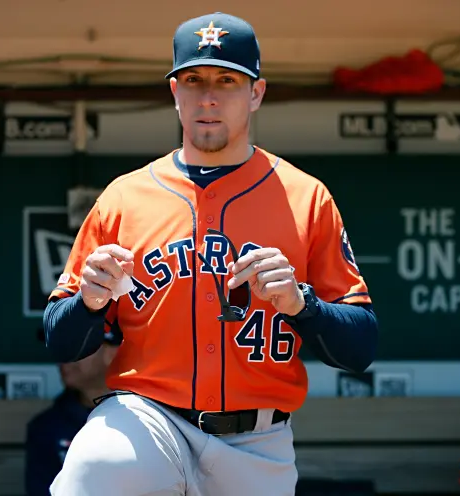
Troy Snitker, seen here as the Houston Astros hitting coach during the 2021 World Series, comes to the Mets after seven years in the Astros organization. Snitker, 36, is baseball royalty by blood (his father is longtime Braves manager Brian Snitker), but he’s forged his own reputation as a forward-thinking coach. He began his coaching career with Houston in 2016 and quickly rose through the ranks, from a minor-league rehab hitting coordinator to the Astros’ major-league hitting coach by 2019. Snitker even earned a World Series ring in 2022 as part of Houston’s championship staff. His tenure in Houston saw the Astros consistently field one of MLB’s most feared lineups, known for a potent mix of power and plate discipline. (Fun fact: Snitker actually got his coaching break when Jeff Albert, then the Astros’ farm hitting coordinator noticed his exercise-science savvy and helped bring him on board. Little did they know they’d reunite in New York years later!)
Despite Houston’s strong track record, 2025 proved challenging. The Astros offense under Snitker slumped in 2025, ranking just 21st in MLB in runs scored and middle-of-the-pack in stats like home runs (tied 16th) and OPS (tied 14th). With Houston missing the playoffs for the first time since 2016, the Astros made Snitker part of a broader post-season coaching purge. In many ways, the situation mirrors the Mets’ own house-cleaning. Snitker now arrives in New York hungry to rebound, armed with the lessons from both Houston’s highs and lows.
What’s Snitker’s hitting philosophy? In a word: biomechanics. Snitker has a master’s degree in exercise science, and he takes a very hands-on, tech-savvy approach to teaching hitting. “Hitting in general is just basic human movement with a bat in your hands,” Snitker has explained, emphasizing that many players overcomplicate things. He believes coaches can sometimes do more harm than good by tinkering too much: “Guys can get coached out of good movements just as quick as they can get coached into them”. In practice, Snitker is known to step into the cage and literally reposition a hitter’s stance or swing to demonstrate the proper feel. As former Astros outfielder Myles Straw noted, having Snitker physically adjust his shoulders or feet made it “easier for me to pick up” the correction, an immediate kinesthetic feedback that clicks better than words alone. This attention to detail and willingness to try new techniques have earned Snitker high praise. Astros assistant GM Pete Putila lauded Snitker’s rare mix of confidence and openness to new ideas, calling him a personable coach who “can relate to anybody,” a crucial trait for working with diverse big-league hitters.
In Houston, Snitker paired with veteran coach Alex Cintron to form a complementary tandem (mixing Snitker’s exercise-science approach with Cintron’s former-player “street smarts”). Now in New York, Snitker will again be part of a tandem, this time under Jeff Albert, to craft a unified hitting strategy. Mets fans can expect Snitker to bring cutting-edge training methods (think: video analysis, kinetic drills, and maybe some high-tech gadgets from Houston’s hitting lab) along with an approachable, teaching mindset. Don’t be surprised to see Mets hitters making subtle stance tweaks, focusing on efficient body movements, and talking about concepts like “getting on plane” or “sequencing” in their swings. Snitker’s goal is to help each player maximize their own swing rather than forcing one cookie-cutter approach. As he’s shown, whether it’s helping a superstar like Kyle Tucker fine-tune his power stroke or turning a raw rookie into a solid contributor, Snitker is all about unlocking a hitter’s natural abilities through science-based adjustments and old-fashioned hard work.
Jeff Albert: Analytics Guru and Architect of a Hitting Revolution
If Snitker is the young prodigy, Jeff Albert is the seasoned professor behind the scenes, and now, on the front lines. Albert, 44, will be the Mets’ Director of Hitting (essentially the head of the hitting program) in 2026. He’s not your typical ex-slugger hitting coach; Albert never played in the majors, but he’s built an impressive coaching résumé across two organizations. After earning a master’s in kinesiology, Albert spent years in the St. Louis Cardinals system and then the Houston Astros system, gaining a reputation as a hitting savant with an analytics-driven approach. The Astros promoted him to their MLB staff in 2018, and St. Louis then poached him to be their head hitting coach from 2019–2022. In St. Louis, Albert implemented a modern hitting philosophy and oversaw steady offensive improvement, the Cardinals’ team batting averages and on-base percentages climbed each season under his watch. He even helped guide superstar Paul Goldschmidt to an MVP season in 2022.
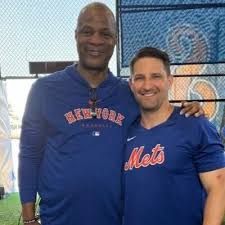
Despite those gains, Albert’s progressive methods (heavy use of data, video, and technology) ruffled some old-school feathers in St. Louis, and he parted ways with the Cardinals after 2022. The Mets quickly scooped him up that offseason, making him their Director of Hitting Development in late 2022. For the past three years, Albert has been the architect of the Mets’ minor-league hitting program, shaping the next generation of Mets hitters. The results have been eye-opening: by the end of 2025, the Mets’ farm system was regarded as one of the best in baseball at producing hitters. In fact, Baseball America ranked the Mets’ minor-league hitting No. 11 in MLB, and ESPN’s prospect guru Kiley McDaniel ranked it No. 1 overall, a huge jump, thanks in large part to Albert’s work. Players like Brett Baty, Mark Vientos, Ronny Mauricio, Francisco Álvarez and others all developed rapidly under Albert’s tutelage and have begun to make an impact in the bigs. As one minor-league broadcaster put it, Albert was “one of the architects behind many of the breakout seasons” for Mets prospects, and he’s highly regarded by players and coaches alike. In other words, this promotion was a “no-brainer”.
Albert’s hitting philosophy is often summarized by a simple mantra: “Swing at strikes. Hit line drives. Hit the ball hard.” In Albert’s view, effective hitting starts with plate discipline and quality contact. Early in his coaching career, he was known for preaching tough, grinding at-bats, avoid the unnecessary swing-and-miss, work the count, and wait for a pitch you can barrel up. Albert teaches hitters to know the strike zone cold and attack pitches in their sweet spot. If you get a pitch you can drive, don’t miss it. With two strikes, his approach shifts to battle mode: foul off tough pitches, put something in play, but don’t give in easily. This strategic mindset of selectively aggressive hitting has been honed with data analysis, Albert is the kind of coach who’ll use video and advanced metrics to find a hitter’s optimal swing path or identify which pitches a player handles best. He combines “common sense and analytic know-how,” as one profile described, influenced by both cutting-edge tech and old-fashioned exercise science. (Yes, like Snitker, Albert has a strong sports science background, he even studied biomechanics long before it was trendy, learning to use video to improve his own swing as a college player.)
In practice, Albert is credited with helping hitters increase their launch angle and pull the ball with authority to maximize damage. During his time with the Cards, for example, the team’s power numbers and walk rates improved as hitters embraced his philosophy. He’s adept at tailoring his coaching to each individual, understanding that “there isn’t just one swing” for everyone, he focuses on each player’s strengths and finding consistency over time. Patience is part of his program: Albert has noted that in year one working with a player you learn their habits, in year two you see improvements “with less consistency,” and by year three the player ideally takes full ownership of making adjustments on their own. That long-term development approach paid off in the minors and now the Mets hope it will pay off in the majors. Another intriguing aspect: Albert and Snitker are already philosophically aligned. Both cut their teeth in the forward-thinking Astros system, and both value data, biomechanics, and individualized coaching. In fact, Albert and new Mets President David Stearns also have a history from Houston – Stearns was AGM of the Astros when Albert was there, and the two bonded over their interest in analytics. Now Stearns has entrusted Albert (and by extension Snitker) to implement that vision with the big-league club, which struggled heavily at the plate in 2025.
What to Expect: A New Hitting Philosophy in Queens
For Mets hitters and fans, this new Snitker–Albert partnership signals a major shift in hitting philosophy. Gone are the days of relying purely on name-value coaches or old-school methods, the Mets are clearly aiming to build a more modern, cohesive hitting program from top to bottom. Here are a few things we can expect from the Snitker & Albert duo:
- One Unified Plan, From Minors to Majors: The promotion of Albert ensures that the same principles that turned prospects into productive young bats will now be emphasized on the big club. Many of the Mets’ homegrown players already know Albert’s methods and speak his language. This continuity should make for a smoother transition and a more unified organizational hitting approach. Young players like Álvarez, Baty, and Mauricio will be working with the same coach who mentored them in the minors, a big plus for their confidence and consistency.
- Plate Discipline and Tough At-Bats: Expect an even greater team-wide focus on controlling the strike zone. The Mets will look to cut down on cheap strikeouts and chase swings. Albert’s influence, in particular, will encourage hitters to be selectively aggressive, swinging at pitches they can drive and laying off pitcher’s pitches. The goal is more walks, better counts, and ultimately better pitches to hit. Under this regime, “free swingers” will be taught to refine their approach and value each plate appearance.
- Advanced Analytics & Tech on Overdrive: Both coaches are adept with numbers and technology. Don’t be surprised if you hear about the Mets using more analytics in game-planning, heat maps of opposing pitchers, iPads in the dugout with swing videos, exit velocity and launch-angle targets, etc. Snitker’s time in Houston and Albert’s analytical bent mean the Mets’ hitters will have a wealth of data at their fingertips. The key difference is these coaches know how to translate that data into simple, usable adjustments for players (no information overload). As Snitker showed in Houston, sometimes it’s as much about how a message is delivered, he might literally guide a player’s hands or stance, as it is about the data behind it.
- Mechanical Tweaks for More Power: Look for the Mets to unlock more power up and down the lineup. Albert is known for teaching hitters to drive the ball in the air (rather than pounding it into the ground) and to pull with authority when appropriate. The Mets have plenty of talent, but at times in 2025 the offense underperformed in slugging. With these new coaches, hitters like Francisco Lindor or Pete Alonso could potentially find another gear, whether it’s Alonso refining his two-strike approach to cut down on strikeouts, or Lindor improving his launch angle to turn doubles into homers. Snitker and Albert will emphasize “hitting the ball hard” consistently, which, combined with better pitch selection, should mean more extra-base hits.
- Better Situational Hitting: One glaring issue for the 2025 Mets was hitting with runners in scoring position. The lineup often struggled to come through in the clutch, squandering too many opportunities. Both Albert and Snitker understand that timely hitting is as much approach and mindset as it is skill. By instilling their philosophy of tough, grinding at-bats, they aim to improve the team’s situational performance. We might see batters more willing to shorten up and go the other way with men on base or simply more confident and prepared in big moments. The Mets were a respectable 9th in runs scored last year, but with this duo, the expectation is to become an elite offense that’s also consistent in key situations.
Overall, the hiring of Troy Snitker and the promotion of Jeff Albert signal that the Mets are “swinging for the fences” (philosophically speaking) when it comes to hitting development. It’s a blend of youthful innovation and seasoned expertise: Snitker brings the fresh perspective of a coach who learned in a championship environment, and Albert provides the overarching vision and continuity from the minors to the majors. Both are fluent in the modern language of hitting – biomechanics, data, and individualized coaching – but also value the age-old fundamentals of a good at-bat.
Mets fans should be excited (and maybe a bit relieved) that the club is addressing a longstanding need with such high-caliber hires. The front office clearly expects that this dynamic duo can unlock the full potential of a lineup that features stars like Juan Soto, Francisco Lindor, Pete Alonso, and Brandon Nimmo. The pieces for a top-notch offense are in place; now it’s up to Snitker and Albert to light the fuse. If all goes according to plan, come 2026 we’ll see a Mets offense that is more disciplined, powerful, and clutch, one that can finally carry the team in big moments, the way fans have been hoping for.
One thing’s for sure: the Mets aren’t sticking to the status quo. By bringing in Snitker and Albert, they’re declaring that mediocre hitting won’t cut it. It’s a bold, proactive move,– and it just might turn out to be a home run. Mets hitters better grab their bats and notebooks, because class with Professors Albert and Snitker is about to begin. The rest of the league? They’ll be on notice if the Mets’ new hitting brain trust can translate theory into thunder on the field. Get ready for a new era of Mets baseball, where patience at the plate and power in the swings go hand in hand.
Source: This article is based on reporting from MLB insiders including Andy Martino (@martinonyc), Ken Rosenthal, and Mark Feinsand, as well as official team statements and in-depth coverage from outlets like The Athletic, MLB.com, ESPN, and FanGraphs. Additional insights were pulled from player interviews, archived coach profiles, and minor league development reports to capture the full scope of Troy Snitker and Jeff Albert’s philosophies and track records. Statistical data was sourced from Baseball-Reference, Statcast, and FanGraphs to highlight performance trends and projections.