The New York Mets have pulled off their share of blockbuster trades, some absolute game-changers that flipped the franchise overnight. Sure, they’ve made plenty of moves fans still lose sleep over, but this isn’t about those disasters. This is about the deals that worked. The ones that brought stars to Queens, sparked playoff runs, and made Mets fans believe again. From clutch midseason steals to franchise-defining heists, these are the five best trades in Mets history, the good kind of wild that actually paid off.
Top 5 Best Trades in Mets History
5. Yoenis Cespedes from the Tigers (2015)
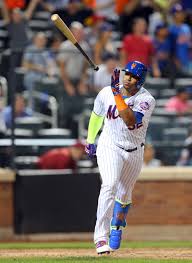
The 2015 Mets desperately needed offense, and they got it in the most dramatic way possible on July 31, 2015. In a last-minute deadline deal, New York acquired slugging outfielder Yoenis Cespedes from Detroit in exchange for two pitching prospects, Michael Fulmer and Luis Cessa. The context: the Mets’ elite young rotation had kept them in contention despite an anemic lineup, so GM Sandy Alderson sought a middle-of-the-order bat for the stretch run. After a few near-misses (Mets fans will recall a nixed Carlos Gomez trade that left Wilmer Flores in tears on the field), Cespedes was the late surprise acquisition that sent shockwaves through the league. Detroit was out of the race and willing to deal Cespedes, a pending free agent, for future pitching, and the Mets were all-in on 2015, willing to surrender a top arm (Fulmer) for a two-month rental with big upside.
Outcome: Cespedes turned out to be the ultimate rental superstar. He went on a torrid hitting spree, launching 17 home runs in just 57 games over the final two months. At one point he smashed 9 homers in a 13-game stretch, almost single-handedly powering the Mets to clinch the NL East by early September. His sheer presence in the lineup transformed the Mets from middling to scary, and they rode that momentum all the way to the 2015 World Series. Cespedes’ impact was so great that the Mets re-signed him after the season (and he’d have an All-Star 2016 before injuries slowed him down in later years). On Detroit’s side, the trade wasn’t a total loss, prospect Michael Fulmer won the 2016 AL Rookie of the Year and became an All-Star pitcher for the Tigers. Why it’s wild: This trade felt like a Hollywood script for Mets fans. It came literally in the final minutes of the deadline (cue the frantic refresh of Twitter feeds), just days after an emotional rollercoaster where a different trade fell apart. Cespedes’ subsequent heroics were the stuff of legend, Citi Field was electrified by his every at-bat. To this day, mentioning 2015 gives Mets fans chills, and the phrase “Cespedes for the rest of us” (a playful nod to a Seinfeld joke) recalls how one bold trade gave an entire fan base a late-season present. It was a thrilling, all-in gamble that paid off instantly, proving that sometimes fortune favors the bold (and the Amazin’).
4. R.A. Dickey to Blue Jays (2012)
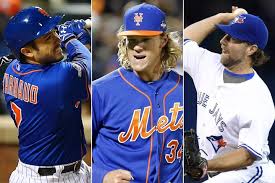
Here’s a modern classic: On December 17, 2012, the Mets sent reigning NL Cy Young winner R.A. Dickey (plus catchers Josh Thole and Mike Nickeas) to the Toronto Blue Jays for two top prospects, Noah Syndergaard (a fire-balling 20-year-old) and catcher Travis d’Arnaud, along with veteran John Buck and a prospect. This trade’s context was all about timing and direction. The Mets were coming off four losing seasons and in rebuilding mode, while 38-year-old Dickey’s value would never be higher after his knuckleball-fueled Cy Young campaign. Toronto, on the other hand, was loading up for a playoff push and was willing to part with elite prospects for immediate help. Essentially, the Mets were selling high on a feel-good story, and the Jays were hoping Dickey could pitch them into October.
Outcome: The deal became a textbook exRample of a savvy sell-high move. Dickey gave Toronto a few okay seasons (he averaged 200 innings with a league-average ERA, solid but never Cy Young-level again). Meanwhile, the Mets’ haul transformed their future. Syndergaard, nicknamed “Thor”, developed into an All-Star power pitcher, won Game 3 of the 2015 World Series, and became an anchor of the Mets rotation in the years that followed. d’Arnaud, though not a perennial All-Star as hoped, was a steady starting catcher and also a key contributor to the Mets’ 2015 NL pennant run. In hindsight, New York traded one magical season of an aging knuckleballer for a decade’s worth of two young, cornerstone players. Why it’s wild: It’s exceedingly rare to see a reigning Cy Young winner traded, and even rarer that the team trading him wins the deal. Mets fans initially had mixed emotions (Dickey was beloved), but the amazement grew each time Syndergaard lit up the radar gun at Citi Field. Chalk this up as one of the Mets’ greatest heists, a deal that proved the old adage, “sometimes it’s better to trade a player one year too early than one year too late” (especially when that player is pushing forty and you can get a future Thor in return).
3. Gary Carter from the Expos (1984)
In December 1984, the Mets made another franchise-altering move, sending Hubie Brooks, Mike Fitzgerald, Herm Winningham and Floyd Youmans to Montreal for Gary Carter, an All-Star catcher known as “The Kid”. Context is key: the Expos were starting to rebuild (dismantling a team that had fallen short in ’84), and the Mets, after a promising 90-win season, were one big piece away from a championship-caliber roster. Their glaring need was a power-hitting, experienced catcher to guide a young pitching staff. Each team’s goal was clear: Montreal wanted to get younger and shed a star’s salary, while New York was all-in for a title run. Carter, a two-time All-Star Game MVP and fan favorite, fit the Mets’ needs perfectly as a middle-of-the-order bat and on-field general.
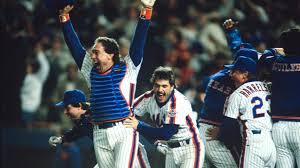
Outcome: Carter delivered everything the Mets hoped for and then some. In 1985, his first Mets season, Carter hit 32 homers with 100 RBIs and famously hit a walk-off homer on Opening Day to endear himself to New York. More importantly, by 1986 he was co-captain (with Hernandez) of a team that won the World Series. Carter clubbed two home runs in the ’86 World Series and had perhaps the most underrated clutch hit of that series, a two-out single in Game 6 that ignited the legendary comeback rally. He spent five seasons in New York, cementing his Hall of Fame résumé (he’d enter the Hall in 2003, albeit with an Expos cap). The prospects given up were solid, Hubie Brooks even made an All-Star team in Montreal, but none had the impact or leadership that Carter brought. Why it’s wild: This Winter Meetings blockbuster was one of the biggest trades of the 1980s, period. It took guts for Mets management to trade a package of young talent for a 30-year-old star, but it paid off as the final championship piece. Mets fans remember it fondly not just for the trophy that followed, but for Carter’s infectious enthusiasm (his curtain-call habit and love of the spotlight) which perfectly matched the Broadway stage of ’80s New York.
2. Keith Hernandez from the Cardinals (1983)
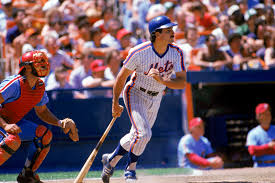
On June 15, 1983, the last-place Mets pulled off a stunning coup by trading pitcher Neil Allen and minor-leaguer Rick Ownbey to St. Louis for Keith Hernandez, a former MVP and defensive wizard at first base. The context here was pure chaos in St. Louis: Hernandez had fallen out with Cardinals manager Whitey Herzog, and his contract was an issue. Sensing opportunity, Mets GM Frank Cashen pounced to grab a star who, at 29, was still in his prime. The Mets’ motive was to infuse leadership and winning pedigree into a young, struggling team. The Cardinals, meanwhile, wanted to rid themselves of a clubhouse headache (and save some salary) even if it meant trading Hernandez within the division. Hernandez himself was shocked and initially unenthusiastic about joining the woeful ’83 Mets (he even contemplated retirement rather than report to New York), which shows just how unlikely this blockbuster was at the time.
Outcome: Hernandez quickly changed his tune and became the heart and captain of the Mets revival. In his first full season in New York, he finished second in NL MVP voting and guided the Mets to respectability. His veteran presence culminated in the 1986 World Series title, where Keith’s leadership and clutch play were invaluable. He earned Gold Gloves every year and was named the franchise’s first team captain in 1987 as the club continued to excel. As for the trade return: Neil Allen was a decent reliever for a few years in St. Louis and Ownbey barely made a dent in the majors. In hindsight, the deal was “grand larceny”, a one-sided steal that gave the Mets their leader of the ’80s for practically nothing. Why it’s wild: How often does a reigning World Series champion dump their star first baseman over personal squabbles? Mets fans still chuckle that Herzog’s grudge became New York’s gain. Hernandez’s arrival accelerated the Mets’ climb from laughingstock to champions, making this trade one of the best in team history (and certainly the best mustache acquisition Queens has ever seen).
1. Mike Piazza from the Marlins (1998)
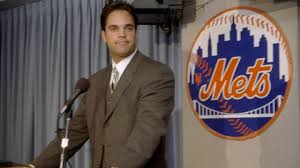
On May 22, 1998, the Mets acquired superstar catcher Mike Piazza from the Florida Marlins in exchange for outfielder Preston Wilson and two pitching prospects (Ed Yarnall and Geoff Goetz). This came just eight days after the Marlins themselves got Piazza from Los Angeles, a quick flip motivated by the Marlins’ post-fire-sale budget cuts. The Mets, a decent team lacking a marquee bat, seized the chance to add a Hall-of-Fame caliber hitter in his prime. The Marlins were simply looking to shed salary and restock the farm, while the Mets were trying to energize their franchise with a bona fide star.
Outcome: Piazza launched the Mets back to relevance, instantly boosting their offense and fan interest. He led New York to the 2000 World Series, made seven All-Star teams as a Met, and became the most prolific home-run hitting catcher in history. Fittingly, he’d later enter Cooperstown with a Mets cap on his plaque. Meanwhile, the prospects the Marlins received had minimal impact, Wilson had one All-Star season (after the Marlins had already traded him onward), and the others never became major contributors. Why it’s wild (in a good way): It’s not often a future Hall of Famer falls into your lap mid-season. This trade was a franchise-changing steal for the Mets, turning a solid ’98 squad into an NL pennant contender overnight. Mets fans still smile about the “Piazza delivery,” a deal that brought one of the franchise’s all-time greats to Queens for the mere cost of spare parts.
What trade did we miss that you loved for our New York Mets team? Start the conversation in the comments…#LFGM
Sources: Historical trade details and outcomes have been compiled from official MLB reports and reputable Mets history archives, as well as contemporary news analyses. These trades continue to be discussed and debated in Mets fan circles for their lasting impact on the franchise. Whether amazingly good or infamously bad, each of these ten trades has secured a place in Amazin’ history, serving as joyful memories or cautionary tales for generations of Mets fans.